
Your complete breastfeeding guide, from the first feed to introducing solid foods. Find practical advice on getting...
Latest posts
-
 The Complete Breastfeeding GuideRead more
-
 Knit the perfect nursing sweater!Read more
Want a cozy sweater that makes breastfeeding really easy? With our Chloé pattern, you’ll be whipping up the perfect...
-

-
 Tongue-Tie: Everything You Need to Know to Help Your BabyRead more
Do you suspect your baby has a tongue-tie? From the symptoms to the release procedure, here's everything you need to...
-

-

-

-
 Baby choking or coughing during feeds? Understand overactive letdownRead more
Baby choking or spitting milk? Follow our 6-step guide to understand and soothe overactive letdown.
-
 Reflux in Breastfed Babies: Solutions to Help Ease the PainRead more
Baby struggling with reflux? Follow our 6-step roadmap to understand GERD and soothe your little one with gentle,...
-

Omega-3: A Must-Have for Pregnancy & Breastfeeding

You've probably heard it before: omega-3s are essential for good health. That's why it's important to consume them regularly, especially during pregnancy and breastfeeding.
A marketing argument to sell you omega-3-enriched products, or a genuine necessity?
Here, we'll explain what role they play in the body and why it's so important to make sure you're getting enough during pregnancy and breastfeeding.
Omega-3s: what are they?
They belong to the large family of essential fatty acids and are called omega-3s because the first double bond in the fatty acid's carbon chain, counting from the end opposite the carboxyl group, is located at the third carbon-carbon bond.
Okay, that's a little technical… so, to keep things simple, let's just remember that there are three particularly important ones:
- ALA (alpha-linolenic acid): it is an essential fatty acid because our bodies cannot produce it from other components in our diet. So, we have no choice but to eat foods that contain it.
It is found mainly in certain vegetable oils, such as rapeseed, flaxseed, walnut, and camelina oil. - EPA (eicosapentaenoic acid) and DHA (docosahexaenoic acid): they can be produced from ALA, but the conversion rate is so low (<1%) that it's essential to make sure our diet provides enough of them as well.
They are found mainly in oily fish (salmon, mackerel, sardines) but DHA is also abundant in breast milk—a strong sign of just how important it is for our bodies (and Baby's)!
Now that you know their little names, you're probably wondering what they actually do—in other words, what they're used for in our bodies... and, by extension, in your baby's.
The answer would probably be far too long and complex to cover here (omega-3s are involved in many chemical processes throughout the body), so we'll focus here on their fundamental role in Baby's brain development.
Omega-3s and pregnancy
Advertisers have taught you this through repetitive—and sometimes slightly guilt-inducing—TV commercials: omega-3s are good for your heart! 
Indeed, studies show that getting enough of them has beneficial effects on high blood pressure and cardiovascular health. But did you know they also play a central role in the development and proper functioning of our brains?
These properties were first brought to light in the early 1980s by Dr Jean-Marie Bourre.
Noticing the abundance of omega-3s in both breast milk and the human brain, he put forward a hypothesis that seemed extremely far-fetched at the time: intelligence could be influenced, or even controlled, by the presence of these fatty acids passed from mother to fetus through the placenta.
Then a researcher at INSERM, he demonstrated in animals in 1984 that a dietary deficiency in ALA alters the course of brain development and disrupts the chemical composition of neurons. In other words: insufficient ALA intake before and during pregnancy can harm a baby's brain development.
How does it work? To understand this, you need to know that the brain is built from—and functions with—fat. But not just any fat! Without nutrients as essential as ALA and DHA, the body cannot build an efficient brain: if the bricks are poor quality, don't expect the house to stay standing!
Did you know? Between the 3rd and 16th weeks after conception, most of the fetus's neurons are produced—and they will last a lifetime. If insufficient omega-3s are available during this period, brain development may be affected. This is why it's particularly important to make sure you're getting enough omega-3s before and during pregnancy.
Before pregnancy? Yes! Because the fatty acids in the mother's diet alone are not enough to support fetal development: a significant proportion of the omega-3s that become part of the fetal brain must come from omega-3s consumed before conception and stored in the mother's body fat.
If you're planning to have a baby, now is the perfect time to get started!
And don't think omega-3s become any less important once the neurons have been produced! Your baby's brain will continue to grow, especially towards the end of pregnancy: each week, your baby's brain accumulates nearly 30 mg of omega-3s. And of course, the story doesn't end there!
Omega-3s and breastfeeding
At birth, your little one's brain weighs around 300 g. By the age of one, it will have gained nearly 500 g. Considering that it is made up largely of fat, this gives you an idea of how important it is to provide it with enough omega-3s, particularly ALA and DHA, during this period!
During the first year of life, infants are estimated to need around 100 mg of DHA per day. Nature is obviously well designed, and breast milk is particularly rich in beneficial omega-3s.
The high concentration of omega-3s in human milk can also be seen as a characteristic that supports the development of the human brain. In herbivores, by contrast, the mother's milk is rich in protein to support muscle growth, while their brains are less developed. Quite something, isn't it?
The omega-3s passed from mother to baby through breast milk come from her diet (around one third) and her stores (two thirds), built up before pregnancy.
If omega-3 intake is too low, the mother's body will prioritize maintaining the concentration of these fatty acids in breast milk... and will therefore draw on its stores, which may come at the expense of the mother's own health. It is therefore important to continue paying attention to your omega-3 intake throughout breastfeeding, to avoid future health problems... or even more immediate consequences.
A recent Canadian study led by Professor Gabriel Shapiro highlighted an association between omega-3 deficiency and the onset of postpartum depression in some mothers. It is therefore essential to make sure your omega-3 intake meets the recommendations of health authorities.
So, what should I eat?
The INCA 2 study (French National Individual Food Consumption Survey, 2006–2007) found that 98.8% of French people had omega-3 intakes well below recommended nutritional levels.
Indeed, our diets generally contain far too many saturated fatty acids (which are harmful to health) and too few of the so-called "good" essential fatty acids. Yet during pregnancy and breastfeeding, as we've seen, essential fatty acid intake needs to increase significantly to meet your baby's needs.
So now is the time to pay particular attention to what's on your plate, giving pride of place to omega-3-rich oils and oily fish.

Top 10 omega-3-rich foods:
- Three vegetable oils compete for a place in your salads and all kinds of vegetable dishes: rapeseed, hemp, and flaxseed oil—which you can of course alternate depending on the dish;
- lamb's lettuce, which also provides fibre and has a delicious, delicate flavour;
- chia seeds (available in health food stores and increasingly in regular supermarkets);
- walnuts;
- mackerel (if you prefer canned mackerel, choose "grilled" or "in its own juices" to avoid the omega-6s found in the preserving oil);
- shrimp;
- sardines;
- eggs (some are even labelled "enriched with omega-3" because the hens were fed flaxseed!).
One notable absence from the previous list is salmon. Yet its flesh, enjoyed by food lovers of all ages, is indeed rich in these precious omega-3s.
But what about the controversy surrounding the pollutants that can be found in certain fish, including salmon? Could they pose a risk to an infant's health?
In recent years, food scandals have followed one another, and the quality of both wild and farmed salmon has repeatedly made headlines. The issue: the various pollutants that can be found in its flesh.
Mercury and methylmercury, tributyltin, pesticides and PCBs... all substances that dissolve readily in animal fats and can therefore be found in oily fish such as salmon.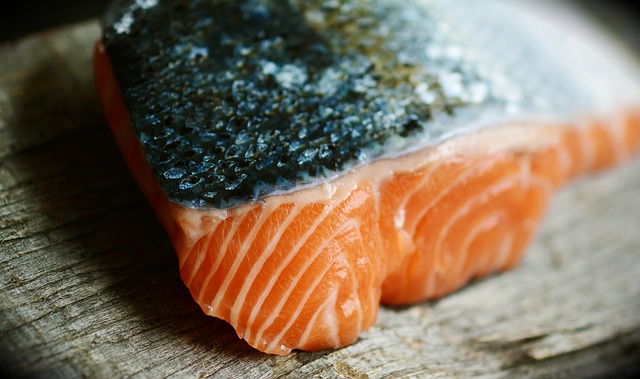
In fetuses and young children, excessive exposure to certain contaminants can pose risks to neurological development. During development, the brain is extremely vulnerable: as we've seen, it is sensitive to nutritional deficiencies, but also to certain toxic substances present in the mother's diet.
Mercury, lead and dioxins can interfere with normal brain development and may affect cognitive development later on.
To benefit from the nutritional value of fish while limiting excessive exposure to certain contaminants, the French health authorities recommend eating two portions of fish per week, including one rich in omega-3s, while varying the species and sources of supply
So, to boost your omega-3 intake, we can't rely on fish alone. We'll need to combine as many different sources as possible to make sure we're getting enough!
Running out of ideas for a delicious meal rich in omega-3s?
My friend Pierre-Yves, the talented chef behind Le Potager Voyageur, and I have prepared a recipe for you that we're sure you'll love!
Want to try this recipe? We've prepared a printable pdf with all the necessary informations for you.

Enjoy and as we say in France : bon appétit!
Posted in:
Practical Breastfeeding Tips
Related posts
-
 Celebrity Breastfeeding Role Models
Coming soon!Read more
-
 Breastfeeding in Public: Why Should Mothers Have to Hide?
Breastfeeding in public shouldn’t be controversial. Discover why mothers shouldn’t have to hide to feed their...Read more
-
 The Perfect Breakfast for Breastfeeding Moms!
Discover the best breakfast options for breastfeeding moms! Nutrient-rich meals to boost milk supply, energy, and...Read more
-
 Full of energy on zero sleep? Here's the secret!
Want your energy back? We share with you our secret weapon to stay alert when sleep is scarce!Read more
-
 Medicines and Common Ailments During Pregnancy and Breastfeeding
Coming soon!Read more
Leave a comment