
Your complete breastfeeding guide, from the first feed to introducing solid foods. Find practical advice on getting...
Latest posts
-
 The Complete Breastfeeding GuideRead more
-
 Knit the perfect nursing sweater!Read more
Want a cozy sweater that makes breastfeeding really easy? With our Chloé pattern, you’ll be whipping up the perfect...
-
-
 Tongue-Tie: Everything You Need to Know to Help Your BabyRead more
Do you suspect your baby has a tongue-tie? From the symptoms to the release procedure, here's everything you need to...
-

-

-

-
 Baby choking or coughing during feeds? Understand overactive letdownRead more
Baby choking or spitting milk? Follow our 6-step guide to understand and soothe overactive letdown.
-
 Reflux in Breastfed Babies: Solutions to Help Ease the PainRead more
Baby struggling with reflux? Follow our 6-step roadmap to understand GERD and soothe your little one with gentle,...
-

How to Increase Breast Milk Supply: 9 Effective Tips

What can you do to increase your breast milk supply?
It's a question every breastfeeding mother asks herself at least once!
Fatigue, a growth spurt, a sick baby... Whatever the reason you need to increase your milk supply, here are 9 effective tips to help you produce more milk quickly.
- Want more breast milk? Breastfeed!
- Want to increase your milk supply? Avoid bottles
- Want more milk? Skip the pacifiers
- A good latch helps increase your milk supply
- Relaxing can help increase your milk supply
- Skin-to-skin contact: great for boosting your milk supply
- Baby wants more milk? Offer both breasts
- What to eat to increase your milk supply
- Increase your milk supply with a breast pump
Want More Breast Milk? Breastfeed!
Breast milk production involves the action of a hormone called prolactin. Its name comes from the Latin prefix pro- (“promoting”), the root lact- (“milk”), and the suffix -in—quite literally, something that promotes milk production.
The amount of milk you produce is influenced by a complex hormonal process, in which prolactin plays an important role. If you want to increase your milk supply, regular breast stimulation is therefore essential.
The more frequently your baby feeds, the more your body receives signals to produce milk. More frequent and effective milk removal generally helps increase milk production.
During the first few days of life, your baby may be too tired to feed very often. Being born is an extraordinarily exhausting experience, and all the unfamiliar stimulation of the outside world can add to that fatigue.
To give your baby the best chance of restoring their energy, offer the breast at the first signs of waking rather than waiting until they cry, which can make them even more tired.
Sucking can have a soothing effect on babies. If you offer the breast when your baby is already exhausted, they may quickly drift back to sleep, significantly shortening the feed—which isn't ideal for either your little one's energy intake or your milk supply.
Want to Increase Your Milk Supply? Avoid Bottles
If your baby cries frequently during the first few days after birth, you may be offered a bottle to supplement breastfeeding while you're still in the hospital.
Once you're back home, you may also be tempted to use one during growth spurts, especially if you're worried that your baby isn't getting enough to eat.
This can be a mistake, with potentially serious consequences for your breastfeeding journey.
As we've seen, breast milk production depends largely on breast stimulation: the more your baby feeds, the more milk your body is encouraged to produce—but the opposite is also true! The less your baby feeds, the less milk your body may produce.
Using supplements, particularly during growth spurts, may prevent your body from adapting to your baby's increased needs. Your milk supply can fall behind, which may eventually lead to unwanted weaning.
It's also worth knowing that infant formula generally takes longer to digest than breast milk.
As a result, your baby may go longer before wanting to feed again, further reducing breast stimulation. This can create a vicious cycle that's difficult to break: restoring your milk supply requires frequent breast stimulation again... and your baby may have to go through a difficult adjustment period while your milk production catches up with their needs!
There's also the possibility of nipple confusion. Although manufacturers have made efforts to design bottle nipples that more closely resemble the mother's breast, feeding from a bottle remains very different, and milk generally flows more easily.
When faced with the choice between a bottle and the breast, some babies may come to prefer the easier flow of milk from the bottle and may eventually refuse the breast.
To avoid these potential difficulties, it may therefore be best to avoid bottles whenever possible!
Want More Milk? Skip the Pacifier
If you want to protect your breastfeeding journey, there's another thing you may want to avoid: the pacifier.
Of course, when you're constantly responding to the needs of your little one, the idea of getting a few minutes of peace and quiet thanks to this small piece of rubber or silicone can be incredibly tempting. But the immediate comfort provided by this tiny accessory may have consequences for both breastfeeding and your baby's health.
First of all, sucking on a pacifier is very different from feeding at the breast, which means there is also a risk of nipple confusion.
But there's another potential concern—this time for your baby's health (and, indirectly, for your milk supply).
The need to suck is a basic need for babies: it's how they feed and get the nourishment they need to grow and thrive.
Now imagine that your baby's need to suck is satisfied by something other than the breast—for example, a pacifier. Your baby feels the need to suck, you offer the pacifier, and it provides comfort... Your baby peacefully falls asleep and may therefore miss an opportunity to feed (and you miss an opportunity to stimulate your breasts!).
Some babies, who are particularly efficient feeders from their very first days or simply have a bigger appetite, will have no trouble making up for it at their next feed.
Others, however, may become increasingly sleepy and less inclined to wake for feeds. As waking up requires a lot of energy, they may sleep for longer and longer periods, spacing feeds too far apart. This can become a vicious cycle that takes time and effort to reverse—and may seriously affect your milk supply.
Given these two potential risks—nipple confusion and insufficient milk intake—the safest approach may therefore be to avoid using a pacifier altogether. The temporary relief it provides may not be worth the potential risks.
A Good Latch Helps Boost Your Milk Supply
As we've seen above, breast stimulation plays an essential role in milk production. But simply putting your baby to the breast isn't always enough to ensure effective stimulation. If your baby isn't getting enough milk, an ineffective latch or sucking pattern may be part of the problem.
A poor latch, a tongue-tie or lip-tie—these are all potential obstacles to breastfeeding that may need to be considered when breastfeeding difficulties arise.
Your baby's weight gain can be a useful indicator if you're unsure.
Compare their growth with the WHO growth charts for breastfed babies: if their weight gain is slower than expected or levels off, it's important to look for the cause without delay.
If your baby isn't gaining enough weight despite regular feeds, the first thing to check is their positioning and latch. One possible sign of a poor latch? Cracked nipples. If you're experiencing them, your baby's positioning may need adjusting.
The 5 golden rules for good breastfeeding positioning:
- Your baby's head should stay aligned with their body: they shouldn't have to turn their head or shoulders to feed;
- Their head should also be tilted slightly backward (depending on the position you use, it may need some support);
- Their chin should rest against the breast;
- Their nose should remain clear rather than pressed into the breast;
- Their mouth should be wide open, with their lips flanged outward. They should take a large portion of the areola into their mouth.
To learn more about different breastfeeding positions, check out our Practical Breastfeeding Guide.
If your baby's latch appears to be good, it may be worth having their tongue and lip ties assessed by a qualified professional.
Put simply, frenula are small bands of tissue that help connect and support the tongue and lips. If you run your tongue between your gums and the middle of your upper lip, you should be able to feel your own upper lip frenulum.
Sometimes, these structures may restrict your baby's ability to open their mouth widely or move their tongue freely. This can interfere with effective breastfeeding: the breast may not be stimulated efficiently, milk transfer may be affected, and your baby may not get enough milk.
If you suspect a problem of this kind, have your baby assessed by a qualified healthcare professional with experience in tongue and lip ties. Depending on the situation, they can determine whether treatment is needed and discuss the available options with you.
A frenectomy—a procedure that releases a restrictive frenulum—may sometimes be recommended to improve tongue mobility and support more effective feeding.
When a restrictive frenulum is genuinely contributing to breastfeeding difficulties, treatment may help improve your baby's ability to feed and may reduce nipple pain or improve milk transfer. However, the benefits vary depending on the individual situation and the underlying cause of the feeding difficulties.
Finding a healthcare professional experienced in assessing and treating tongue ties can sometimes be challenging. Your pediatrician or an IBCLC lactation consultant may be able to guide you toward appropriate support.
Find out everything you need to know about tongue ties here.
Relaxing: A Simple Way to Help Boost Your Milk Supply
Stress is an ancient survival response that helps the human body adapt to danger, making us faster and stronger to face the threat—or turn around and run away from it!
Obviously useful when you're being chased by a saber-toothed tiger, this response becomes less helpful when the threat—or what we perceive as a threat—lasts for more than a few minutes. Over time, its effects can even become harmful if nothing helps bring the situation back under control.
During your baby's first months of life—and sometimes well beyond—you may be faced with countless sources of stress: postpartum pain, your baby's crying, difficulties understanding and responding to their needs, constant family visits, lack of sleep... Unless you became a meditation master during pregnancy (and even then!), you're unlikely to escape stress altogether.
We know that stress can take a toll on the body over the medium and long term. But did you know it can also make breastfeeding considerably more difficult?
To better understand why, let's take a moment to look at the role of a hormone that is essential to lactation: oxytocin.
The release of this hormone in the body—triggered when your baby's suckling stimulates your nipples during a feed—causes the cells surrounding the milk-producing alveoli to contract. In other words, it triggers the release of milk.
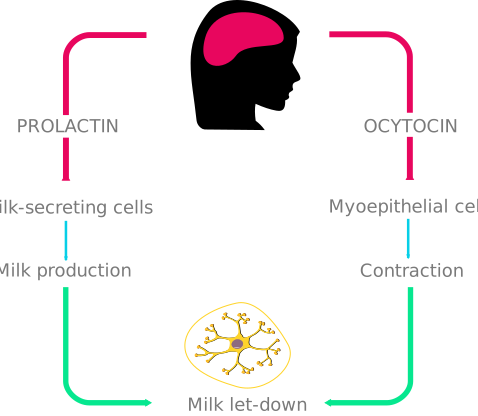
Without oxytocin, little or no milk is released. Stress can inhibit the release of this hormone, sometimes making breastfeeding difficult and painful for Mom—and frustrating for Baby!
When the breasts are not emptied effectively, the body may receive the wrong signal, suggesting that less milk is needed. A drop in milk production can then follow.
If you want to boost your milk supply, keeping your stress levels as low as possible can therefore make a real difference: politely postpone unwanted visits, delegate tasks that don't require your attention to your partner or someone else whenever possible, and take advantage of every opportunity to nap. In short: take care of yourself! Your milk supply will thank you for it.
For more details, take a look at our article on the effects of stress on breastfeeding and try our magical—and completely free—anti-stress tool!
Skin-to-Skin: A Great Way to Boost Your Milk Supply
Among all the tips and tricks for increasing your milk supply, there's one you can use as much as you like: skin-to-skin contact.
Traditionally used immediately after birth to reassure your baby and help them naturally find their way to the breast, this technique is often abandoned by parents afterwards—probably because they're not fully aware of all its benefits.
Beyond its soothing effects, skin-to-skin contact has many other lesser-known benefits. First, it helps your baby regulate their body temperature more easily, meaning they use less energy to stay warm. That energy can then be put to better use when it's time to feed—which, let's remember, requires a real effort and a significant amount of energy for a newborn. More alert, your little one may feed more effectively and for longer, providing better stimulation for your breasts and helping maintain your milk supply.
What's more, when your baby is placed directly against your skin, they can smell your milk around your nipples. It's a bit like walking past a bakery: whether you're hungry or not, the delicious smell of freshly baked pastries drifting through the air can make you want to step inside.
It's the same for your little one: attracted by the smell of milk, they may look for the breast even if their tummy isn't completely empty yet. This extra stimulation sends your body a clear message: it's time to produce more milk!
Finally, skin-to-skin contact can also help with another essential factor we've already discussed: your stress level. This close contact can bring comfort and a sense of well-being, while your baby feels warm and safe against you. Enjoy this moment to relax and recharge.
In practical terms, a skin-to-skin session of around 60 to 90 minutes is often recommended—the length of a complete sleep cycle. If that sounds like a long time and you don't feel like taking a well-deserved nap, you can also find skin-to-skin wraps and shirts that help you maintain skin-to-skin contact while going about your day.
Baby Wants More Milk? Offer Both Breasts at Every Feed
Here's a question many new breastfeeding moms ask: should you offer one breast or both at each feed?
During the first few weeks of breastfeeding—or whenever you need to boost your milk supply for any reason—the answer is clear: offer both breasts at every feed.
During the first six weeks of your baby's life, hormonal conditions are particularly favorable to increasing the amount of milk produced each day. But your milk supply will only increase if your baby stimulates your breasts effectively and regularly. Once again: the more your baby feeds, the more milk you produce.
In practice, babies often fall asleep while feeding from the first breast, as feeding requires a significant amount of energy from their small reserves.
A useful trick is to change your baby's diaper at that point, then immediately offer the second breast. Awakened by the change of scenery—and perhaps the cool air on their little bottom—your baby will be better able to decide whether they're still hungry.
They eagerly latch onto the second breast? Perfect! The extra stimulation will help support your milk supply.
If they refuse to feed, you'll know they've probably had enough rather than simply falling asleep from fatigue.
Good to know: breastfed babies are generally able to regulate how much milk they take. Offering the second breast won't make your baby overeat!
What to Eat to Make More Breast Milk
If you're looking for a natural grandmother's remedy to help boost your milk supply, you may have heard about galactagogues.
Galacto-what?
A galactagogue is a food or substance traditionally believed to help support or increase breast milk production.
Fresh vegetables in general—and fennel in particular—are often mentioned among foods believed to have galactagogue properties. They can therefore be worth including in a varied diet if you're looking for ways to support your milk supply.
Non-alcoholic beer, quince jam, apples, fruit jellies and Ovaltine are also regularly mentioned for their potential effects on milk supply.
We would happily have added marshmallows to the list—but there's no need to rush out and buy a bag of them! Originally made with mucilage extracted from the marshmallow plant (Althaea officinalis), which has traditionally been considered a galactagogue, modern marshmallows are made from sugar, egg whites and gelatin. Unfortunately, there's nothing particularly galactagogue about that!
If none of the foods mentioned above appeal to you, you'll find a list of other foods traditionally considered galactagogues below.
No need to dig out your favorite notebook and copy them all down: I've prepared a handy PDF you can print!
Simply click on the image below to download it.
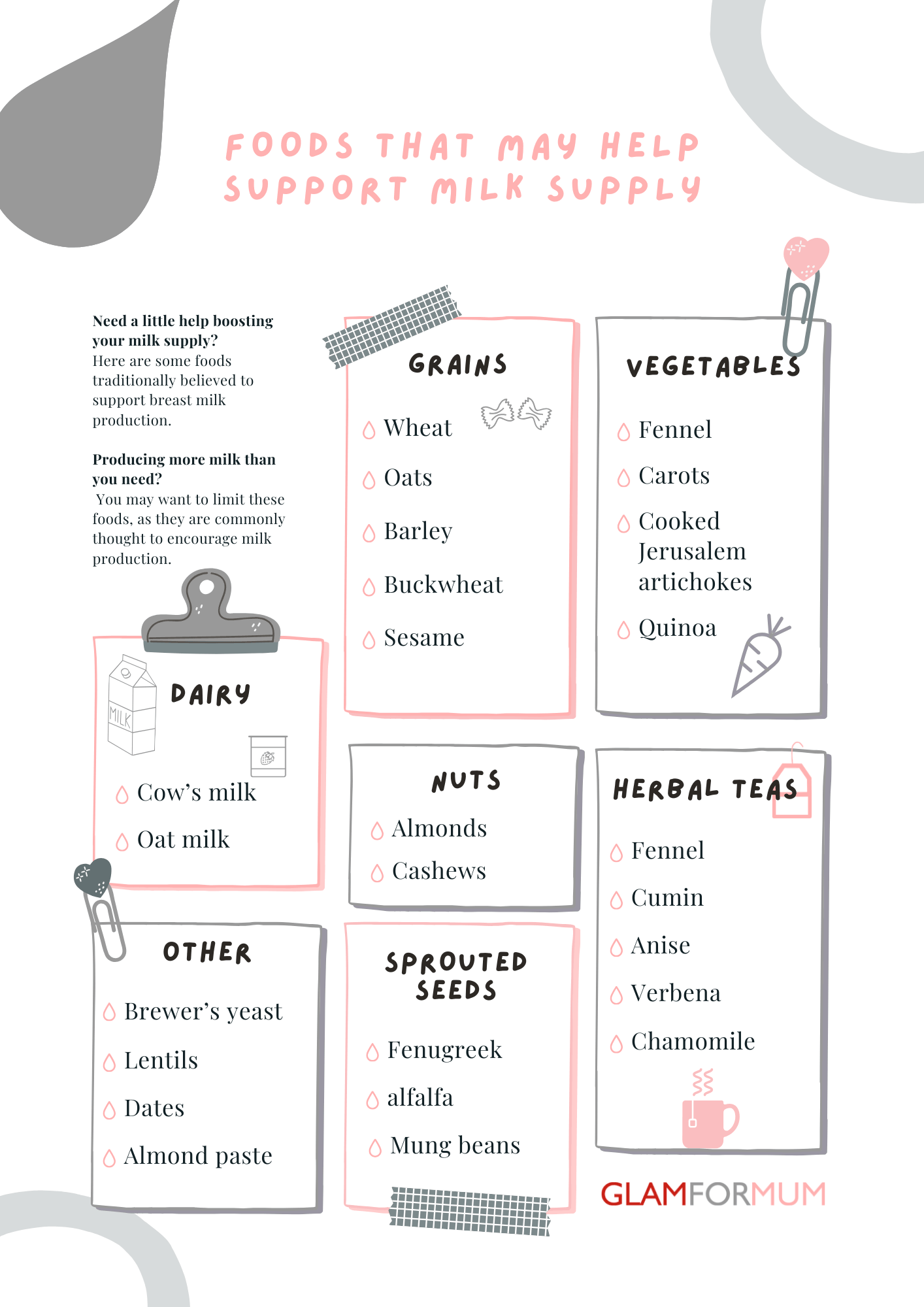
Tip: During a growth spurt, there's no harm in enjoying these foods as part of a varied diet—but remember that frequent breast stimulation remains the most effective way to increase milk production.
Make More Breast Milk with a Breast Pump
Our final tip for boosting your milk supply: the breast pump.
Whether you need to be away from your baby for a few hours and want to make sure they have milk while you're gone (which can be offered using a syringe or spoon, for example), or you're simply looking to increase your milk production, a breast pump can be a valuable ally.
There are many different models, but they generally fall into two main categories: manual and electric breast pumps.
A manual breast pump is perfectly suitable for occasional use—for example, if you're away from your baby for a few hours and want to leave them some milk. Lightweight and compact, it can also come with you when you're out and about, allowing you to express milk and relieve the discomfort of overly full breasts.
The downside of manual pumps? They require quite a bit of effort and demand your full attention. Don't expect to read a book or watch your favorite TV show while pumping—you'll probably be far too busy for that!
The alternative, of course, is an electric breast pump. Available as single or double pumps—meaning you can express milk from one or both breasts at the same time—and varying in convenience and noise level depending on the model, electric pumps allow you to express milk more quickly and with less physical effort. Add a hands-free pumping bra to hold the pump flanges in place, and you can even scroll through your latest baby photos and videos while pumping.
The main drawback of an electric breast pump is its price, which can be significantly higher than that of a manual model. Depending on where you live, health insurance or other healthcare programs may help cover the cost or rental of a breast pump. It's worth checking what support is available locally.
Good to know: pumping shouldn't be painful or significantly uncomfortable. If it is, the breast shield—the part of the pump that surrounds the nipple—may not be the right size or fit for you.
Nipple and breast anatomy varies considerably from one mother to another, which is why breast shields are available in different sizes. Choosing the right one is important—much like choosing the right size of shoes.
Most breast pump brands provide guidance on choosing the right breast shield size, so don't hesitate to check the recommendations for your particular pump to make sure you're using a suitable fit.
To boost your milk supply, you can use a breast pump between feeds—or immediately after a feed—to further stimulate milk production. Your body will get the message: more milk is needed!
Another question that often concerns mothers who express milk is how to store it safely. This infographic can be a useful reminder of the recommended storage guidelines.
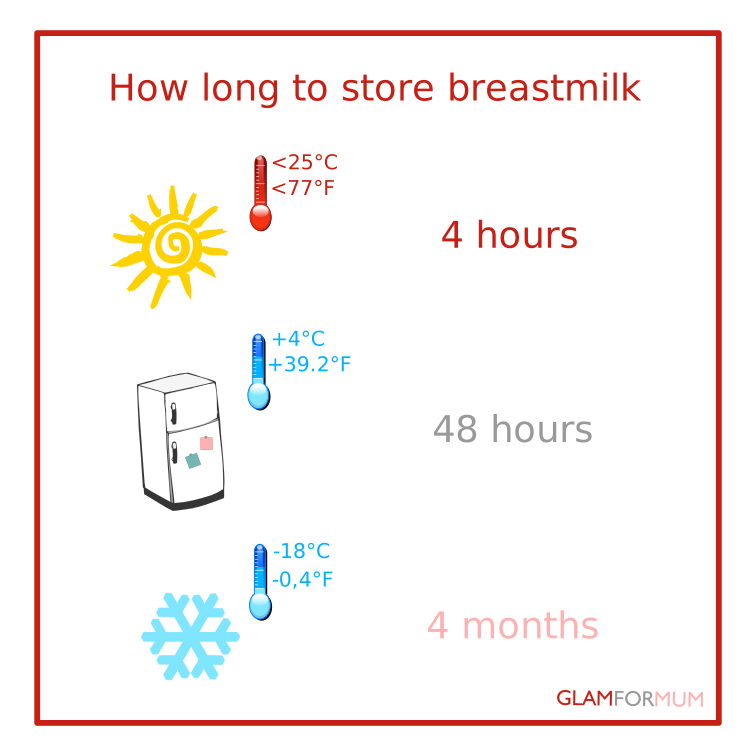
Want to learn more about storing breast milk? Have questions about thawing milk or storing it after thawing?
You'll find all the information you need, along with our free printable reference sheets, here.
Posted in:
Practical Breastfeeding Tips
Related posts
-
 Celebrity Breastfeeding Role Models
Coming soon!Read more
-
 Breastfeeding in Public: Why Should Mothers Have to Hide?
Breastfeeding in public shouldn’t be controversial. Discover why mothers shouldn’t have to hide to feed their...Read more
-
 The Perfect Breakfast for Breastfeeding Moms!
Discover the best breakfast options for breastfeeding moms! Nutrient-rich meals to boost milk supply, energy, and...Read more
-
 Full of energy on zero sleep? Here's the secret!
Want your energy back? We share with you our secret weapon to stay alert when sleep is scarce!Read more
-
 Medicines and Common Ailments During Pregnancy and Breastfeeding
Coming soon!Read more
Leave a comment